
Platform
AAV-delivered antibody therapy targeting persistent viral infection
A single platform designed to provide sustained in vivo expression of therapeutic antibodies that can continuously block viral spread and reservoir replenishment.
Why chronic viral infections remain difficult to treat
Modern antiviral therapies have transformed care for chronic viral diseases, helping millions manage their conditions and slow disease progression.
Yet for many infections, treatment suppresses viral activity without fully eliminating the mechanisms that maintain infection, requiring continuous therapy for years or decades without providing a lasting therapeutic solution.

The path to a functional cure
Current antiviral therapy suppresses viral replication without eliminating the reservoir that maintains infection. Our HBV approach adds a potent neutralizing antibody designed to block new rounds of infection. As infected liver cells naturally turn over, the viral reservoir can progressively decline — potentially leading to a durable, treatment-free cure.
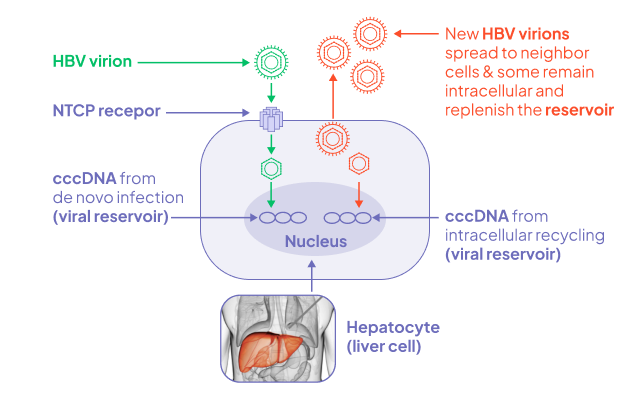
1 — Chronic infection
The virus enters the cell and replicates after forming a viral reservoir. New virions spread to neighboring cells, while intracellular processes can also replenish the cccDNA reservoir.
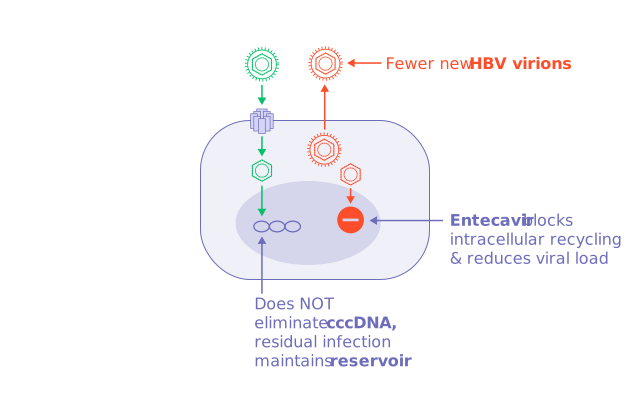
2 — Suppression
Standard-of-care entecavir suppresses intracellular viral replication but does not eliminate cccDNA, reducing viral burden without eliminating the reservoir that maintains infection.
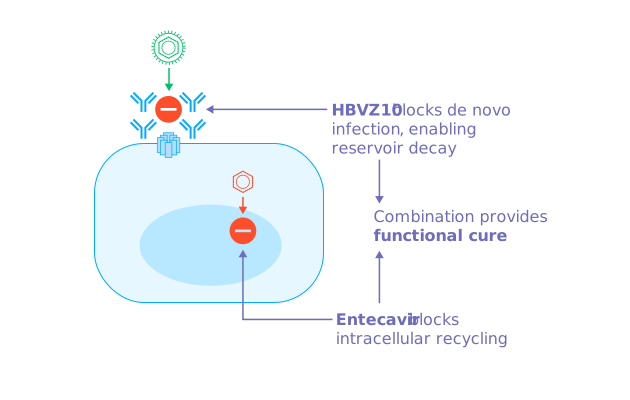
3 — Functional cure
HBVZ10 provides a durable extracellular blockade against de novo infection, complementing entecavir’s inhibition of intracellular viral replication. In preclinical studies, this dual mechanism produced substantially greater cccDNA reduction and HBsAg seroclearance than entecavir alone, supporting its potential as a functional-cure strategy.
Zhang, BH. et al. 2025. Mol Ther Methods Clin Dev. 33:4.
Key scientific insight
Persistent viral infections can be maintained by viral reservoirs and recurring cycles of viral spread or reactivation.
- HBV
- CMV
- HDV
- Other chronic viral infections
Maintaining sustained levels of a neutralizing antibody may continuously block extracellular viral spread and prevent new rounds of infection.
When reservoir replenishment is blocked, natural turnover of infected cells may progressively reduce the persistent viral reservoir.
One AAV dose could convert muscle into a sustained antibody factory, continuously blocking reseeding, resulting in the potential for a lasting cure.
The Perpetuu Thesis:
Sustained in vivo expression of neutralizing antibodies can continuously block viral spread and reservoir replenishment.
The goal: enable natural turnover of infected cells to progressively reduce persistent infection.
Why this matters
The lack of a functional cure is reflected in the clinical outcomes of current therapies, which leave patients at risk.
| Disease | Current outcomes |
|---|---|
| Cytomegalovirus (CMV) in transplant patients | Incomplete protection from reactivation |
| Hepatitis D (HDV) | Limited treatment options |
| Hepatitis B (HBV) | Viral suppression |
How Perpetuu works
Our proprietary AAV-delivered antibody platform is designed to provide durable therapeutic antibody exposure from a single administration, potentially overcoming the limitations of chronically administered antiviral or antibody therapies.
1 — AAV8 Vector
Encodes a therapeutic antiviral antibody for sustained expression.

2 — Single IM Administration
Delivered via one intramuscular injection

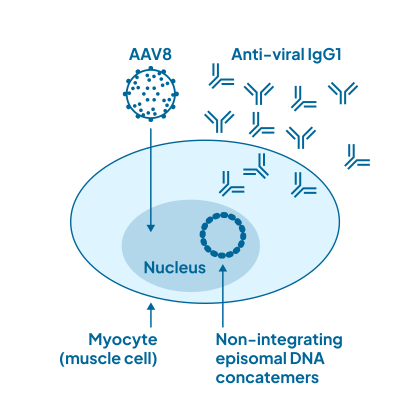
3 — Muscle Cell Transduction
The vector delivers the antibody-encoding sequence to skeletal muscle cells.
Non-integrating episomal vector genomes support sustained (months-years) production and secretion of the therapeutic antibody from skeletal muscle.
Perpetuu vs. current therapies
Existing antivirals
chronic dosing
suppress viral replication
typically disease-specific
may not eliminate persistent reservoirs
Monoclonal antibodies
repeat infusions
neutralize extracellular virus
disease-specific
antibody exposure declines between doses
Perpetuu
single administration
sustained in vivo antibody production
common delivery platform + disease-specific antibodies
Designed for continuous antibody exposure
From platform to pipeline
A powerful technology platform is only meaningful if it leads to transformative therapies.
Perpetuu is applying its proprietary platform to a growing pipeline of therapeutic programs beginning with both CMV and chronic hepatitis B and designed to expand into additional infectious diseases over time.